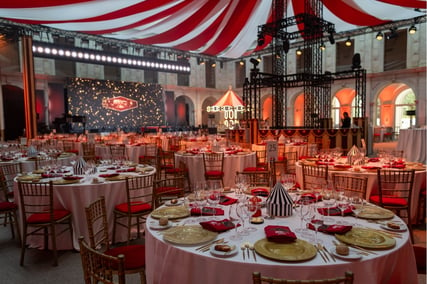
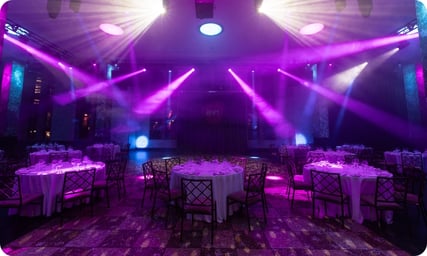
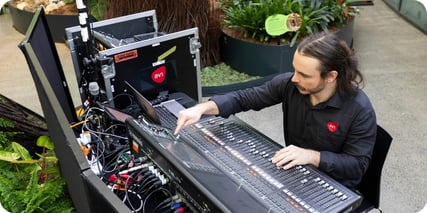
Long before screens are flown, lighting is patched, or the first speaker steps on stage, experienced event planners are already solving the same challenge:
How do you get everyone to see the same vision?
A CEO is imagining a polished conference environment. Marketing wants something immersive and brand-led. Sponsors are focused on visibility. Production teams are thinking about sightlines, stage layouts, camera positions, and guest flow.
3D event renders help bring those conversations together before a single piece of gear arrives onsite.
At AV1, renders have become a core part of how we collaborate with clients, venues, agencies, and presenters. They’re not just there to make a concept look good in a proposal deck. When used properly, they become a practical planning tool that helps shape better event experiences from the very beginning.
Show, don’t tell
One of the biggest advantages of 3D visualisation is its ability to simplify complex conversations.
Instead of asking stakeholders to interpret floor plans, imagine stage layouts, or visualise lighting concepts from moodboards, renders give everyone a shared point of reference.
You can walk a client through:
- how the LED will sit within the room
- what guests will see from different seating positions
- how branding integrates into the environment
- how lighting changes the atmosphere throughout the event
- how presenters interact with the stage and screens
That clarity becomes especially valuable in architecturally distinctive venues or flexible event spaces where room orientation and production design can dramatically change the guest experience.
At venues like MCA Australia, for example, renders allow us to map production design directly onto the space itself. Instead of designing inside a generic black box, we can work with the architecture, integrated lighting infrastructure, harbour views, and existing rigging positions to create environments that feel intentional and connected to the venue.
For planners managing multiple stakeholders, renders also help remove ambiguity from the process. Everyone around the table can react to the same visual rather than imagining completely different versions of the event in their head.
And often, that means better decisions happen earlier.


Turning creative ideas into practical planning
Renders are just as valuable operationally as they are creatively.
Beyond selling a concept, they help production teams pressure-test how the event will actually function onsite.
That might mean:
- checking sightlines from the back of the room
- testing whether presentation content is readable on LED
- understanding how camera angles will frame presenters
- identifying where lighting may create glare or shadows
- reviewing guest flow between event spaces
- refining stage positioning before build begins
These details might seem small individually, but together they have a huge impact on how polished an event feels.
They also help presenters prepare more confidently.
Seeing the stage environment ahead of time gives speakers a much clearer understanding of how they’ll move through the space, where confidence monitors will sit, how their content will appear, and where audience attention will naturally be focused.
That often leads to stronger presentation design, smoother rehearsals, and fewer last-minute surprises onsite.
For hybrid and content-heavy events, visualisation becomes even more valuable. You can test how remote contributors will appear onscreen, how different content layouts work across LED formats, or whether a multi-screen setup actually supports the storytelling rather than distracting from it.
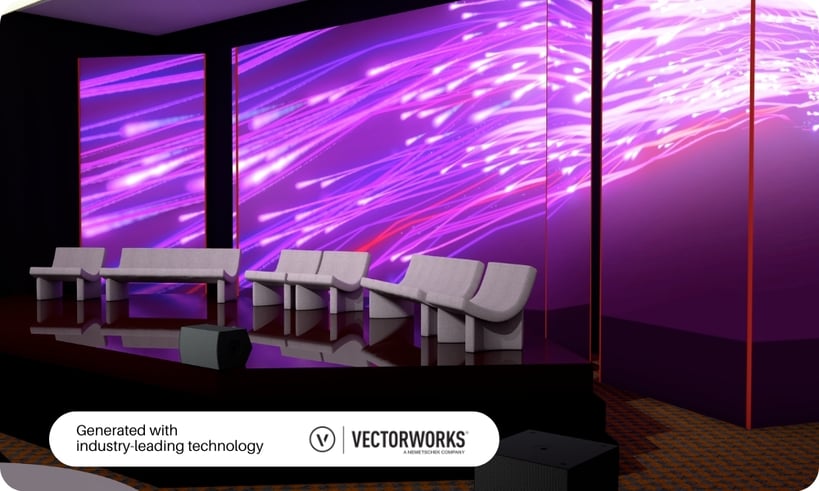
Stage design rendered by AV1.
Aligning stakeholders before show day
One of the most underrated benefits of rendering is how effectively it aligns teams early in the planning process.
When stakeholders can clearly see the environment being proposed, conversations become more productive and approvals tend to happen faster.
Sponsors can understand how their branding integrates into the experience. Venue teams can review operational considerations. Creative teams can refine styling and content approaches. Production crews can assess technical requirements well before bump-in.
It also reduces unnecessary revisions and speculative decisions.
Rather than overbuilding “just in case”, teams can make more informed choices around staging, lighting, LED, scenic elements, and room layouts because the impact is visible before anything is physically installed.
That leads to more efficient production planning, smoother delivery onsite, and a more cohesive guest experience overall.
Most importantly, it allows everyone involved to move forward with greater confidence.


From render to reality
One of the most rewarding parts of the process is seeing how closely the final environment reflects the original concept.
At AV1, renders are regularly used to support:
- conferences and leadership forums
- gala dinners and awards nights
- immersive brand activations
- hybrid and virtual environments
- premium venue experiences
- sponsor integrations
- large-scale LED environments
And while the final event always evolves throughout production, having a clear visual roadmap from the beginning helps ensure the experience feels considered from every angle once guests arrive.
Because ultimately, great event environments rarely happen by accident.
They’re tested, refined, adjusted, and visualised long before doors open.